How to stop a small mistake turning into a big repair bill. Putting the wrong fuel in your car happens more often than people admit. You pull in, you are thinking about work or the school run, and you grab the wrong nozzle. Petrol into a diesel, or diesel into a petrol.
The mistake itself is not the expensive part. What you do in the next few minutes is. Get those minutes right and the wrong fuel in your car costs you an afternoon. Get them wrong and it can cost you thousands.
What To Do If You Have Put the Wrong Fuel in Your Car
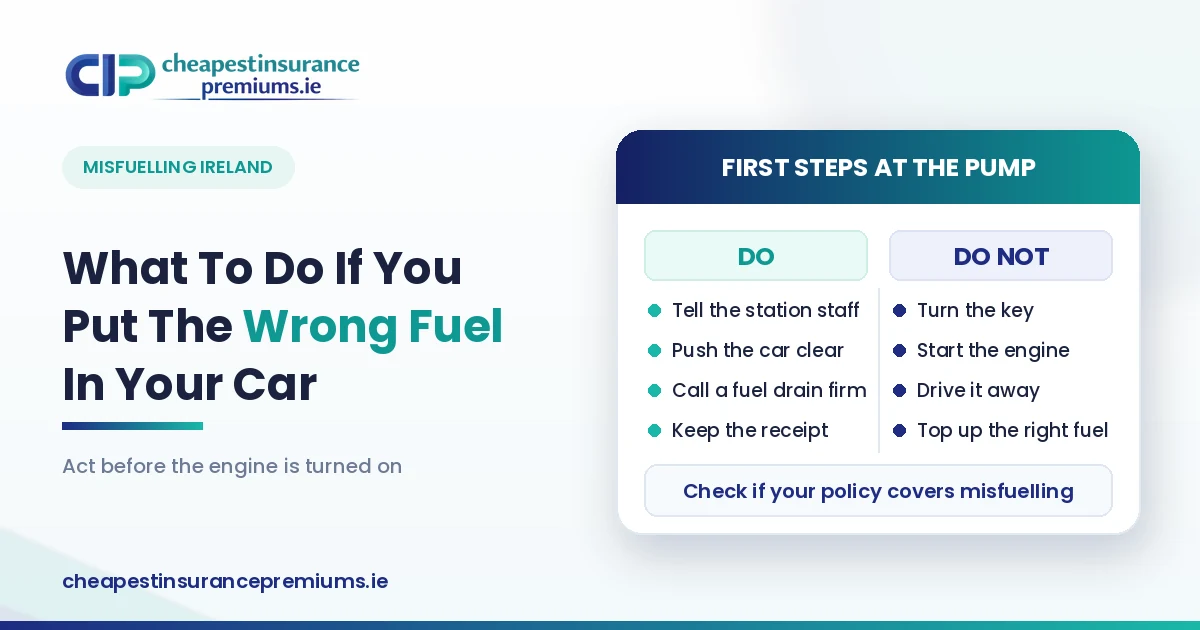
1. Do Not Start the Engine
This is the one rule that matters most.
Leave the key out. Do not press the start button. Do not turn on the ignition to move a window or check the radio. Modern diesel cars start priming the fuel system the moment the electrics come on, so the wrong fuel can be drawn through the engine before you have gone anywhere.
If the fuel stays in the tank, you are looking at a drain and a flush. If it gets through the system, you are looking at something much worse.
2. Tell the Station Staff
They deal with this regularly and it will not be the first time this week. They can help you push the car clear of the pump to a safe spot, and most stations have a recovery firm they use.
Do not be embarrassed into driving off to sort it somewhere quieter. That is the decision that costs money.
3. Call for Breakdown Assistance
Ring your breakdown provider or a fuel drain specialist. A roadside drain and flush usually takes an hour or so, and in most cases you can drive away afterwards.
Some breakdown policies include misfuelling. Plenty do not, or cover the drain but not any damage that follows. Ask before you agree to anything so you know who is paying.
4. Check What Your Policy Says Before You Pay
Call your insurer or broker before you authorise a repair. They will tell you whether the work is covered, whether you need to use an approved garage, and whether a claim is even worth making once the excess is taken into account.
Paying first and asking later is how people end up out of pocket on a bill that would have been covered.
What If You Have Already Driven Off With the Wrong Fuel in Your Car?
If the car is running badly, losing power, misfiring or making an unfamiliar noise, pull in as soon as it is safe and switch it off. Every extra kilometre pushes contaminated fuel further through the system.
Once you have stopped, treat it exactly as above: do not restart it, and call for recovery to a garage. A car that has been driven on the wrong fuel needs a proper look, not just a tank drain.
Why Petrol in a Diesel Car Is Worse
This is the more common mistake, because the petrol nozzle is narrower and slides easily into a diesel filler neck.
It is also the more damaging one. Diesel lubricates the fuel pump and injectors as it moves through them. Petrol does the opposite. It acts as a solvent and strips that lubrication away, so metal parts built to very fine tolerances start wearing against each other almost immediately.
Caught at the pump, it is a drain and flush. Driven on, it can mean a new high-pressure fuel pump, injectors, filters and fuel lines.
What Happens If You Put Diesel in a Petrol Car?
Much less common, because the diesel nozzle is wider and usually will not fit a petrol filler neck. It still happens, especially with older cars or at pumps with worn nozzles.
Diesel does not burn properly in a petrol engine. The car will typically struggle to start, run rough, misfire and produce a lot of smoke. It is messy, and it can foul the spark plugs and the catalytic converter, but it does not tend to cause the same mechanical damage as petrol in a diesel.
Catch it before starting the engine and a drain and flush will normally sort it.
What About a Small Amount?
People often ask whether a few euro of the wrong fuel in a nearly full tank will just dilute away.
Sometimes it will, particularly a small amount of diesel in a large petrol tank. But it depends on the car, the engine and how much went in, and getting it wrong is expensive. Do not take the guess yourself. Ring a garage or your breakdown provider, tell them the car, the fuel and roughly how many litres, and let them make the call.
If you are not certain which engine your car has, especially in a newer or second-hand car, your VIN number will confirm the exact model and fuel type.
What It Costs
There are really only two outcomes, and they are far apart.
Caught at the pump: a drain and flush, plus a fresh tank of the correct fuel. Inconvenient, and a chunk of your week gone, but manageable.
Engine started or driven: potentially fuel pump, injectors, filters and fuel lines, and on a diesel possibly the DPF too. This runs into the thousands on some models.
That gap is the whole reason the first rule exists.
Does Car Insurance Cover Putting the Wrong Fuel in Your Car?
Often, no. Standard comprehensive motor insurance is built around accidents, fire, theft and storm damage. Damage caused by putting the wrong fuel in the car is specifically excluded by many Irish insurers, because it is treated as driver error rather than an accident.
Where cover does exist, it is usually in one of two places:
- Breakdown or roadside assistance, either built into the policy or bought as an add-on. This is the most common route, and it normally covers the drain and recovery rather than engine repairs.
- A misfuelling extension, offered by some insurers as an optional extra, often capped at a set amount.
What to check: your policy wording under exclusions and under breakdown assistance, and the claim limit if there is one. If breakdown cover is not on your current policy, it is worth asking what it adds when you compare motor quotes at renewal, because it is usually cheap next to a single call-out.
Would It Affect My No Claims Bonus?
If the work is done through breakdown assistance, usually not. If you make a claim on the motor policy itself, it can be treated like any other claim and reduce your bonus at renewal, unless you have it protected.
Before you claim, weigh the repair cost against your excess and what your no claims bonus is worth to you. On a smaller bill, paying it yourself often works out cheaper over the following few years.
What If It Happens in a Work Van?
The same rules apply, but the cover sits elsewhere. Check the breakdown section of your van insurance policy, and check who is liable if the van is owned by the business rather than by you. If you are a sole trader, your business cover and your van policy need to line up on class of use, so it is worth pricing both together with a van quote and a sole trader business quote.
How To Avoid Putting the Wrong Fuel in Your Car
Nearly every case comes down to a change of routine: a new car, a hire car, a work van, or borrowing someone else’s.
- Say the fuel out loud before you lift the nozzle. Sounds daft. Works.
- Know the colours. In Ireland, petrol pumps are generally green and diesel black. Do not rely on this alone at unfamiliar stations, but it is a useful second check.
- Put a label inside the fuel flap if you have recently switched car or fuel type. A strip of tape with “DIESEL” on it costs nothing.
- Fit a filler cap insert if you drive a diesel. It blocks the narrower petrol nozzle and costs a fraction of a tank drain.
- Be extra careful with hire cars, courtesy cars and vans. These are the ones that catch people out.
- Watch out in a two-car household where one is petrol and one diesel. Swapping between them is where most mix-ups start.
- Keep the car’s paperwork straight. While you are at it, check the motor tax on the car so nothing else is running out on you.
Our Final Thought
Putting the wrong fuel in your car is annoying, but on its own it is not serious. It only becomes serious when the engine gets started.
Leave the key alone, tell the staff, ring for help, and check what you are covered for before anyone starts work. Do those four things and most misfuelling ends as a wasted afternoon rather than a repair bill.
Not sure what your policy covers? Cheapest Insurance Premiums compares cover across Irish insurers, so you can see what breakdown assistance and misfuelling cover actually cost before you renew. Get your quotes here, read more guides on the blog, or contact us if you want to talk it through.
Frequently Asked Questions
Can I drive a short distance if I have put the wrong fuel in my car?
No. Even a short drive circulates the fuel through the pump and injectors, which is what turns a straightforward drain into a serious repair. Leave the car where it is and call for recovery.
How long does a fuel drain take?
A roadside drain and flush usually takes around an hour, plus waiting time for the van to reach you. If the car has to go to a garage, expect it to be off the road for a day or more.
Is the wrong fuel in your car covered by comprehensive insurance in Ireland?
Often it is not. Many policies exclude damage caused by using the wrong fuel. Cover more commonly sits in breakdown assistance or in an optional misfuelling extension, so check your policy wording rather than assuming.
Is petrol in a diesel worse than diesel in a petrol?
Yes. Petrol removes the lubrication that a diesel fuel system depends on, and can damage the pump and injectors quickly. Diesel in a petrol engine mainly causes rough running and smoke, and is usually less costly to put right.
What if I only put a small amount of the wrong fuel in?
Do not decide on your own whether it is safe. Ring a garage or your breakdown provider with the car details and how many litres went in, and follow their advice.